

Navigating the GE Fanuc Series 90-30 PLC CPU Lineup
For decades, the GE Fanuc Series 90-30 PLC has been a trusted name on the factory floor. Its reputation for ruggedness and reliability is well-earned. This guide provides a fresh look at five central processing units from this classic series. We will compare their distinct capabilities and ideal use cases. This analysis will help you select the perfect controller for your automation project.
The Engine of Automation: PLC Core Functionality
A Programmable Logic Controller CPU is the brain of a control system. It operates on a continuous scan cycle. This process involves reading input signals, solving the user-programmed logic, and then writing to outputs. This deterministic execution is vital for predictable machine behavior. Moreover, these CPUs manage data handling and network communications seamlessly.
Model Breakdown: From Compact to Powerhouse
IC693CPU352: The Foundation for Simple Control
This model serves as an economical starting point for smaller applications. It offers a solid 20 Kbytes of memory for logic storage. Therefore, it is perfectly suited for basic tasks like controlling a single machine or a simple process. However, its limited I/O count makes it less suitable for large-scale expansion.
IC693CPU360: The Versatile Mid-Range Workhorse
Stepping up, the CPU360 provides a robust 64 Kbytes of memory. It supports a greater number of I/O points and features a faster internal bus. This balance of performance and cost makes it a highly popular choice. As a result, you often find it managing complex machinery or medium-sized process cells.
IC693CPU363: Optimized for Data-Intensive Tasks
This unit doubles the memory of the CPU360 to 128 Kbytes. The expanded capacity is ideal for applications requiring significant data handling. This includes complex batch processes, extensive recipe management, or detailed production reporting. Its architecture favors applications with heavy math or register-based operations.
IC693CPU364: Engineered for High-Speed Performance
While it also has 128 Kbytes of memory, the CPU364 distinguishes itself with raw processing speed. It executes Boolean logic and control instructions much faster than the 363. This high-speed operation is critical for rapid discrete manufacturing. Consequently, it excels in high-speed packaging, assembly, and testing automation.
IC693CPU366: The Apex of the Series for Large Systems
The CPU366 is the flagship of this group, boasting a substantial 256 Kbytes of memory. It can handle the largest I/O configurations in the series. Furthermore, its advanced communication capabilities allow it to lead distributed control systems (DCS). It is the go-to choice for plant-wide control and sophisticated, integrated production lines.

Strategic Selection for Real-World Applications
Matching the CPU to your specific task is crucial for efficiency and cost-effectiveness. For a simple pick-and-place unit, the CPU352 is sufficient. A full packaging line might require the balanced power of a CPU360 or CPU363. A high-speed bottling line would demand the rapid scan times of the CPU364. For overseeing an entire production area with multiple cells, the CPU366 provides the necessary power and connectivity.
Expert Commentary and Forward-Looking Advice
From an integration standpoint, these CPUs represent a mature, yet highly capable, technology. A common mistake is under-estimating future needs. I always advise engineers to allocate at least 30% extra memory for unforeseen program changes. While the CPU364’s speed is a key asset, the CPU366’s communication prowess often provides more long-term value in our interconnected Industry 4.0 landscape. For new projects, also consider the availability of spare parts and programming support.
Practical Application Scenarios
Scenario 1: Automotive Component Assembly
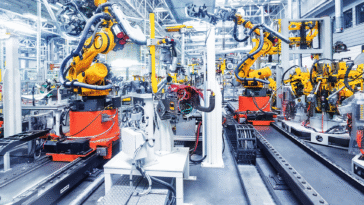
A robotic welding cell uses a CPU360. It manages the robot’s I/O, controls clamping cylinders, and monitors safety interlocks. The CPU’s reliability ensures continuous operation on the production line.
Scenario 2: Water Treatment Plant
A CPU363 controls chemical dosing for a treatment basin. Its larger memory handles complex PID loop control for multiple valves and pumps. It also logs flow and pH data for regulatory compliance.
Scenario 3: Pharmaceutical Packaging Line
A CPU364 controls a high-speed cartoner. Its fast execution scans ensure precise timing for inserting leaflets and sealing boxes at over 200 units per minute.

Frequently Asked Questions (FAQ)
Q1: Are GE Fanuc Series 90-30 PLCs still a good choice for new projects today?
A1: While reliable, they are considered legacy technology. For new projects, consider modern controllers with enhanced cybersecurity, connectivity, and support, unless specific legacy compatibility is required.
Q2: What is the main difference between the IC693CPU363 and IC693CPU364?
A2: Both have 128K memory, but the CPU364 has a significantly faster processor, making it better for high-speed discrete applications.
Q3: Can I upgrade from a CPU352 to a CPU366 on the same rack?
A3: Generally, yes. The CPUs are physically compatible with the Series 90-30 rack. However, you must ensure the power supply can handle the potential increased I/O load.
Q4: What programming software is used for these CPUs?
A4: They are programmed using GE Fanuc’s Proficy Machine Edition Logic Developer PLC software.
Q5: Which CPU is best for a system that requires extensive data communication with other devices?
A5: The IC693CPU366 is the best choice, as it is designed with superior communication capabilities for managing large, networked systems.

 No products in the cart.